Smarter food choices start here
Scan any food and know its glycemic index, hidden sugars, and full nutrition in seconds — so you can keep your blood sugar steady without the guesswork.
- Free to try
- Science-backed GI data
- 7 languages
More than just a GI number
FoodCheck reads the food in front of you and turns it into clear, useful guidance — not a wall of nutrition jargon.
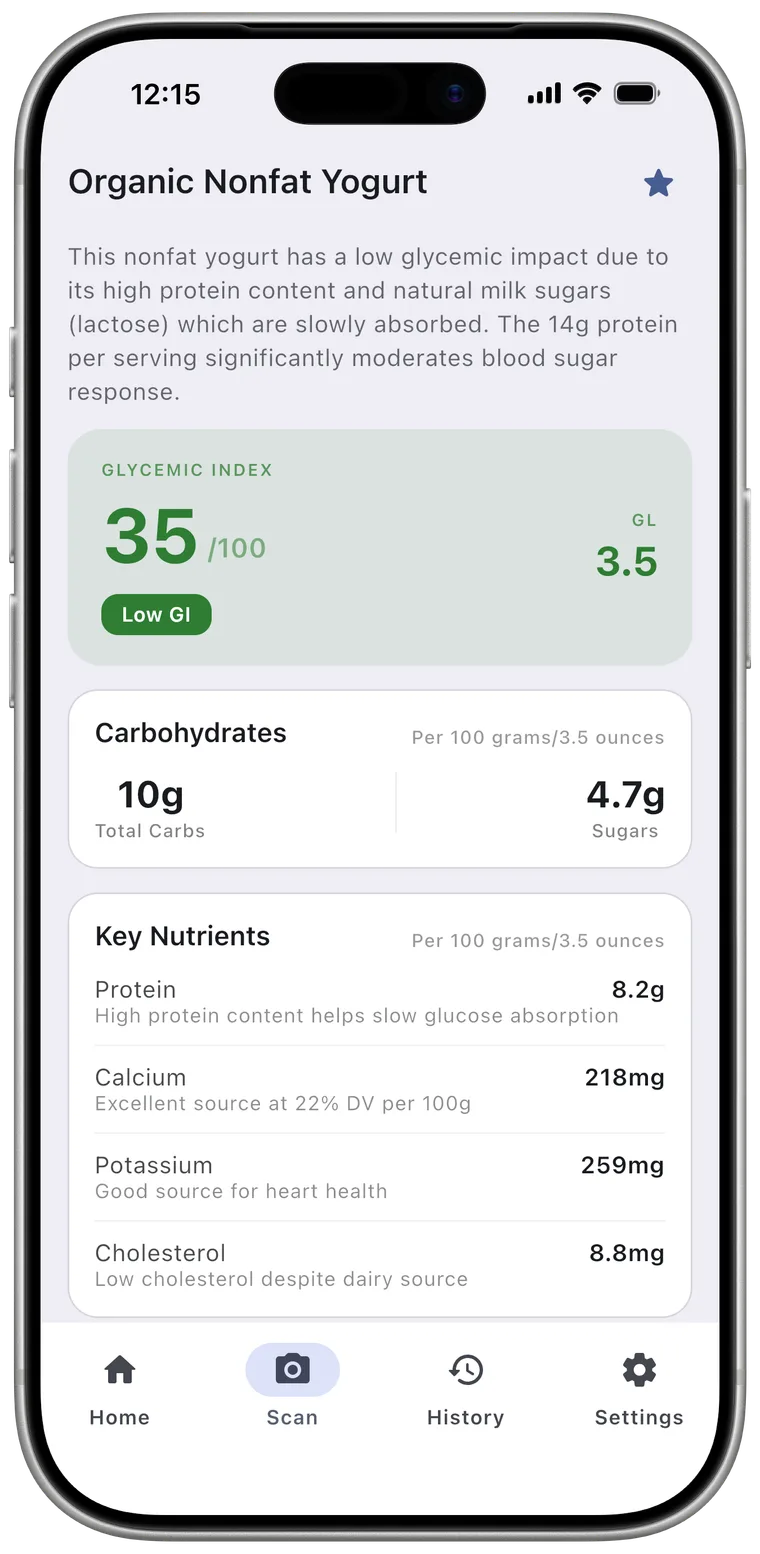
Instant glycemic index
Point your camera at a label or a meal and get the GI on a clear low–medium–high scale in seconds.
Glycemic load too
GI tells you how fast; glycemic load tells you how much. FoodCheck shows both so the number actually fits your portion.
Hidden sugar detector
Spot added sugars hiding under 50+ names — from maltodextrin to fruit-juice concentrate — before they reach your basket.
Full nutrition picture
Carbs, sugars, fiber, protein, fat and calories — read and explained, not just listed.
Labels, meals & whole foods
A packaged label, a plate of food, or a single apple — scan all three and still get a GI answer.
History & favorites
Every scan is saved so you can compare foods over time and reach for the low-GI ones you already trust.
Personalized to your goal
Diabetes, prediabetes, weight loss, keto or general health — guidance is tuned to what you’re managing.
Export a PDF report
Share a clean summary of your scans with a doctor or dietitian in a tap.
Three taps to a smarter choice
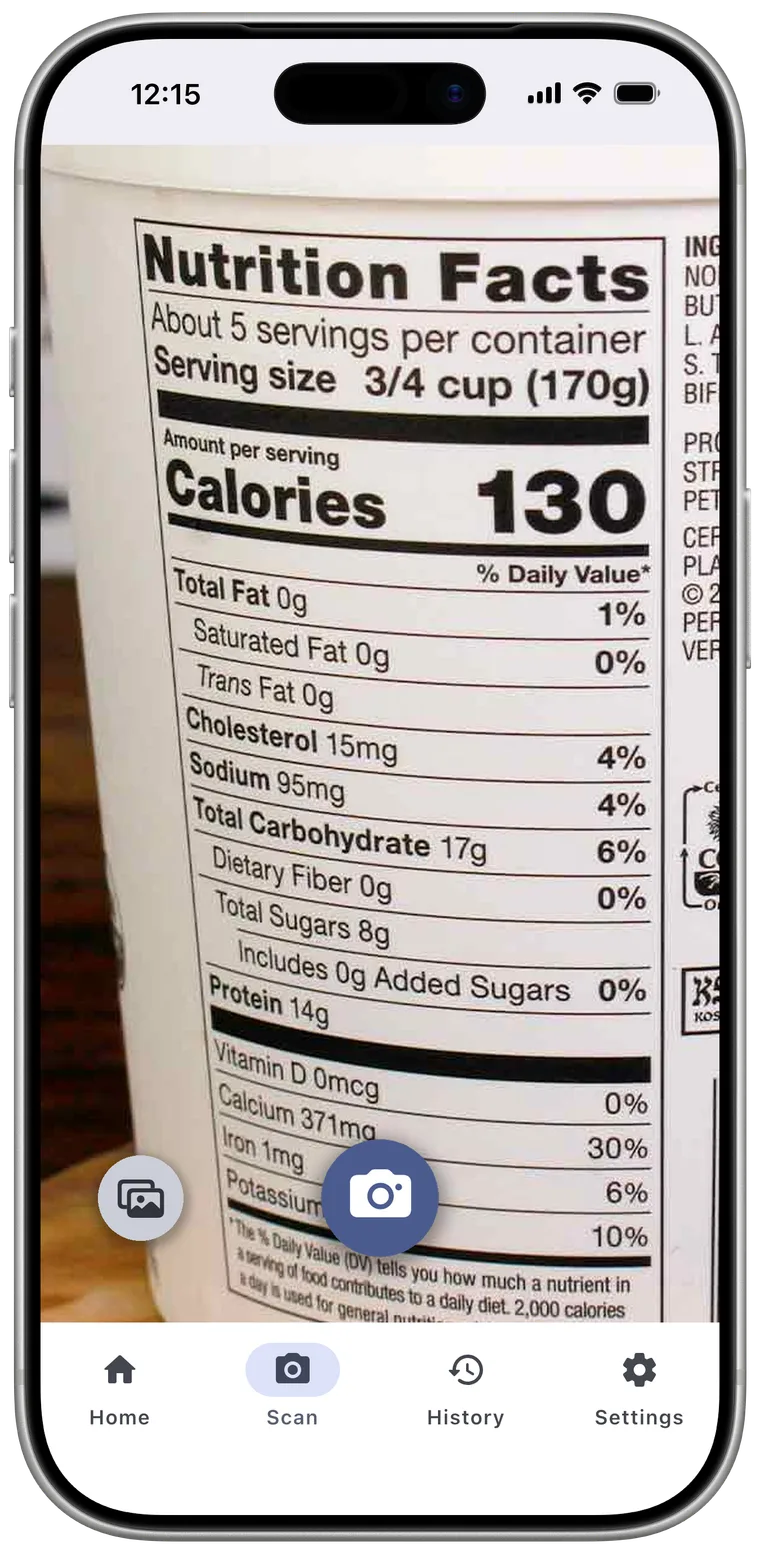
Scan any food
Open FoodCheck and point your camera at a nutrition label or the meal on your plate.
See the glycemic index
Get an instant GI score with glycemic load, hidden sugars, and the full nutrition breakdown — explained in your language.
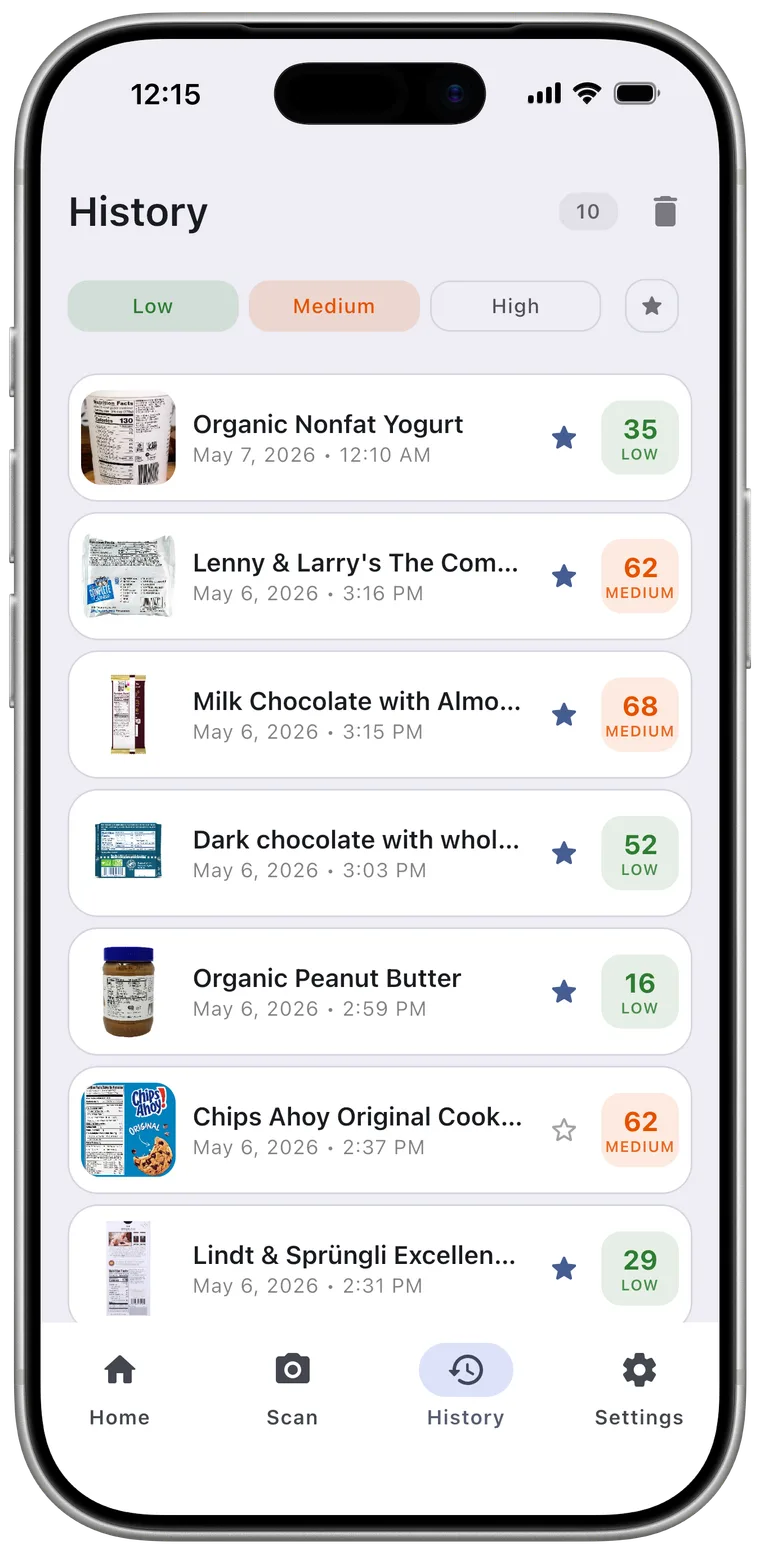
Choose the better option
Compare against your history and pick a lower-GI swap with confidence. Every scan is saved for next time.
Low, medium or high — at a glance
Every food lands in one of three bands. Greener is gentler on your blood sugar; red rises fast. FoodCheck does the lookup and shows you green, amber, or red.
Learn what GI means →Lentils, most fruit, oats, plain yogurt
Basmati rice, honey, sweet corn
White bread, instant oats, cornflakes
Tuned to what you’re managing
Questions, answered
What is the glycemic index?
The glycemic index (GI) ranks carbohydrate foods from 0–100 by how quickly they raise blood sugar. Low-GI foods (55 or under) cause a slower, gentler rise; high-GI foods (70+) spike it faster. FoodCheck GI shows this number instantly for whatever you scan.
How does FoodCheck GI work?
Point your phone at a nutrition label or a meal. FoodCheck reads it, identifies the food and portion, and returns the glycemic index, glycemic load, hidden sugars, and full nutrition — usually in a few seconds.
Is it accurate?
FoodCheck combines published glycemic-index research with AI analysis of the label or food in front of you. Nutrition labels are the most precise input; meals and whole foods are estimated. Published GI values naturally vary between studies, so we treat the result as well-sourced guidance, not a lab measurement.
Do I need to wear a glucose monitor?
No. FoodCheck GI works entirely from your phone’s camera — there’s no sensor to buy and nothing to wear. It’s a fast, affordable way to understand foods before you eat them.
Is FoodCheck GI free?
Yes, you can start scanning for free. FoodCheck Pro unlocks unlimited scans and the full feature set. FoodCheck GI is available on Google Play and the App Store.
Can it help with diabetes or weight loss?
Many people use FoodCheck to choose lower-GI foods for steadier blood sugar or appetite control. It’s an educational tool, not medical advice — always follow the guidance of your doctor or dietitian.